

Choosing a core drill: hand-held or rig, wet or dry
Hand-held or rig, wet or dry, how it is held and what it runs on: work it out from the hole size and the material.
Concrete Care. Last updated 2026-10-20.
Three things decide which core drill you need: how big the hole is, what it goes through, and whether you can use water where you are drilling. A fourth decides the version you buy: the power supply on site. Typical jobs are holes for waste pipes, soil pipes, ducting and cable runs. Work through the sections below, check the chooser table at the end, then pick the machine from Core Drilling Machines & Stands.
Hand-held or on a stand
A hand-held motor suits smaller holes, work at height and tight spots where a stand will not fit. A stand takes the bigger diameters, keeps the hole straight and takes the load off the operator. Go by the maker's hand-held limit: the DB-162D is rated 162 mm by hand and 202 mm on a stand.
Several motors work both ways, and the maker gives a larger capacity on the stand. The Bycon DB-162D is rated 162 mm hand-held and 202 mm rig-mounted. The Bycon DB-202D reaches 202 mm with a stand, and the Bycon DMP-202BD is sold for handheld or rig-mounted drilling.
For the Bycon motors with a 60 mm collar, the Bycon DBS-162 drill rig has a maximum drilling diameter of 252 mm, 580 mm of travel and a column that tilts from 0 to 45 degrees for angled holes. Bycon lists it for the DB-162, DB-202 and DB-352 motors.
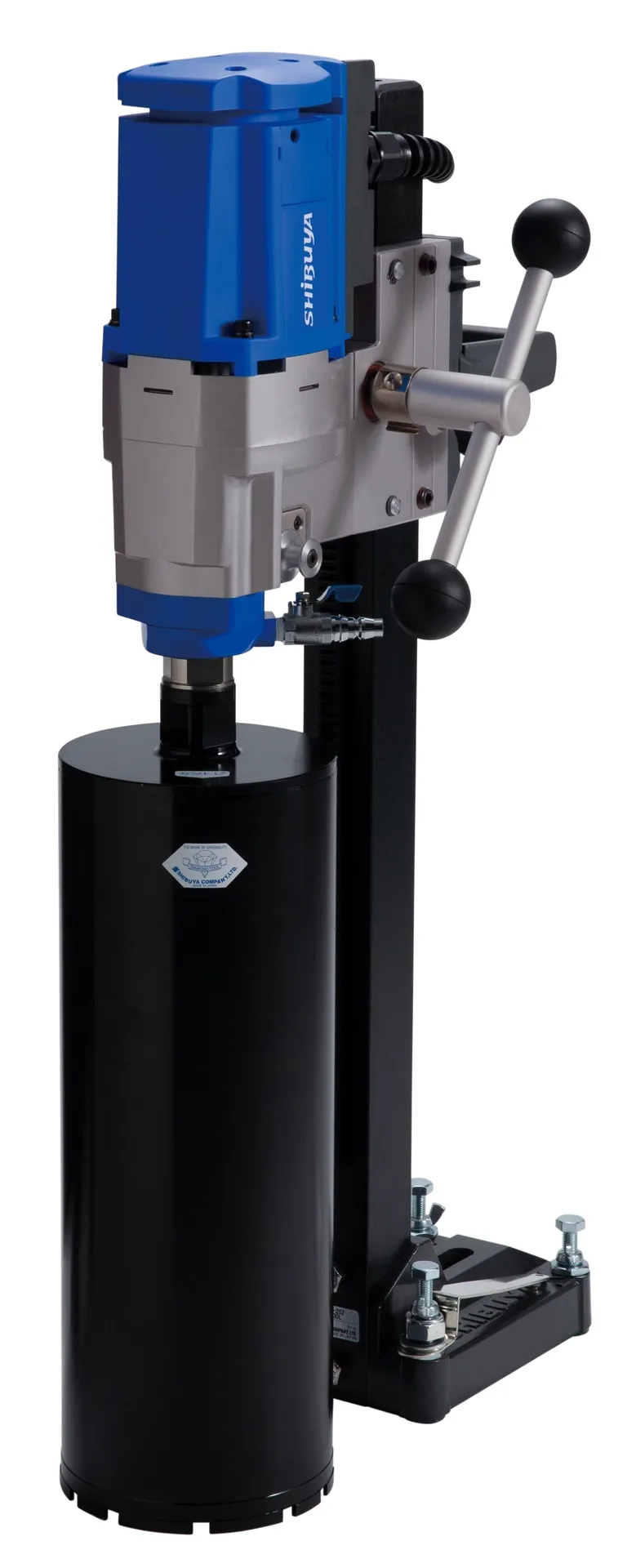
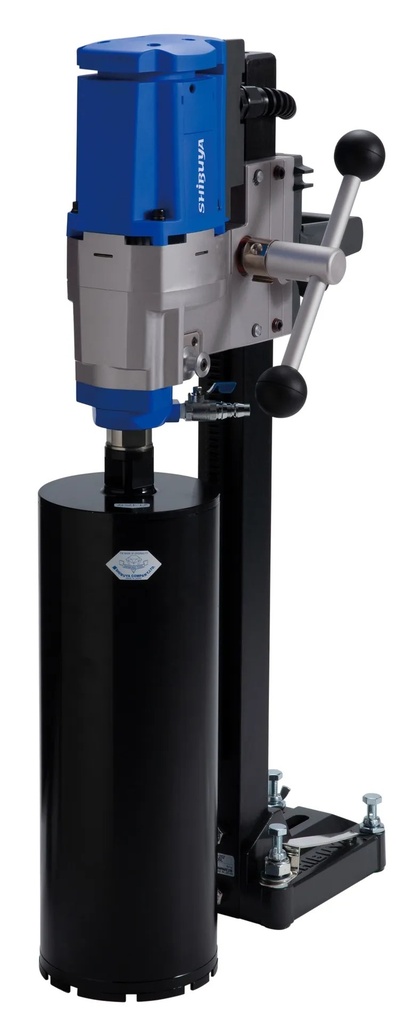
The Shibuya sets are motor and stand together, built for the stand. The Shibuya H1521 motor on the TS-165 stand takes bits up to 180 mm; the largest set, the Shibuya H2531 on the TS-605, takes bits up to 600 mm with its 130 mm spacer.
Wet or dry
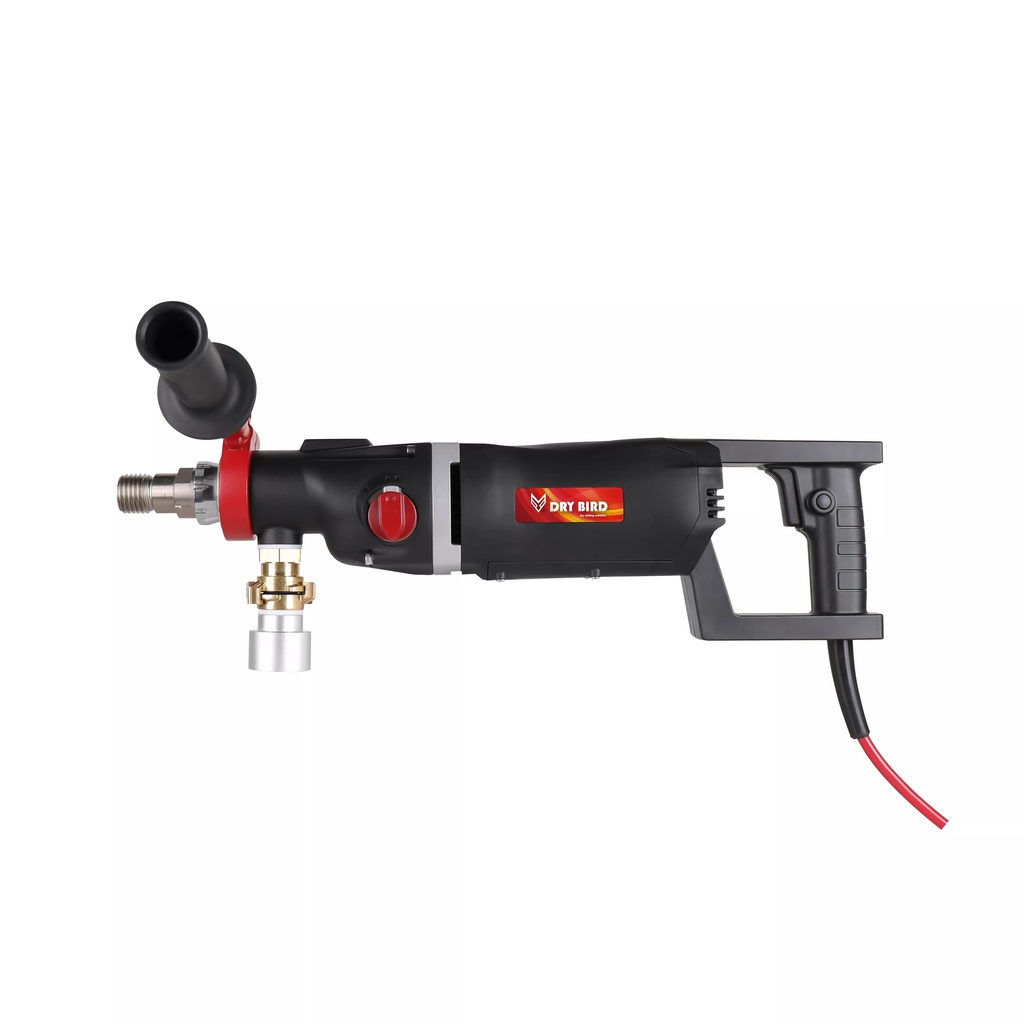
With most motors the choice is made when you buy. Bycon sells its micro-percussion motors as dry drills and its DMP motors for wet drilling (the DMP-352 page says wet and dry use).
Dry drilling suits work indoors where water would do damage, with extraction at the bit. The Bycon DB-132 is a dry micro-percussion drill rated 132 mm in concrete and 202 mm in masonry, so the material changes the size you can drill. The DB-162D and DB-202D are dry micro-percussion motors as well. The Eibenstock ESD 162 is a dry drill with soft impact, at its optimum between 82 and 162 mm.
Wet drilling feeds water to the bit. It cools the segments in reinforced concrete and on bigger diameters, and it leaves slurry to deal with. The DMP-202BD is Bycon's wet motor for hand-held or stand use, and the Bycon DMP-352 is its heavy rig motor. The Shibuya motors have a multi-position water swivel inlet.
Bycon rates some dry motors for reinforced concrete too: the DB-202D is built for dry drilling 202 mm in reinforced concrete, and the DB-132 is rated 132 mm in reinforced concrete. Go by the maker's rating for the material and diameter; for bigger holes, Bycon's DMP-352 wet motor is rated 402 mm.
Motor speed against bit diameter
Bigger bits run slower, which is why core drill motors have two or three gears. The DMP-202BD shows the pattern: its three gears are rated for 202 mm, 132 mm and 76 mm, with no-load speeds of 510, 1,450 and 3,000 rpm. The DB-202D has two gears, 700 and 1,550 rpm no-load, rated for 202 mm and 102 mm.
At the large end, the Shibuya H2531 runs at 150, 300 and 600 rpm no-load at 110-120 V and 175, 350 and 700 rpm at 220-240 V, for bits up to 600 mm.
Use the gear the maker rates for your bit size.
110 V or 230 V
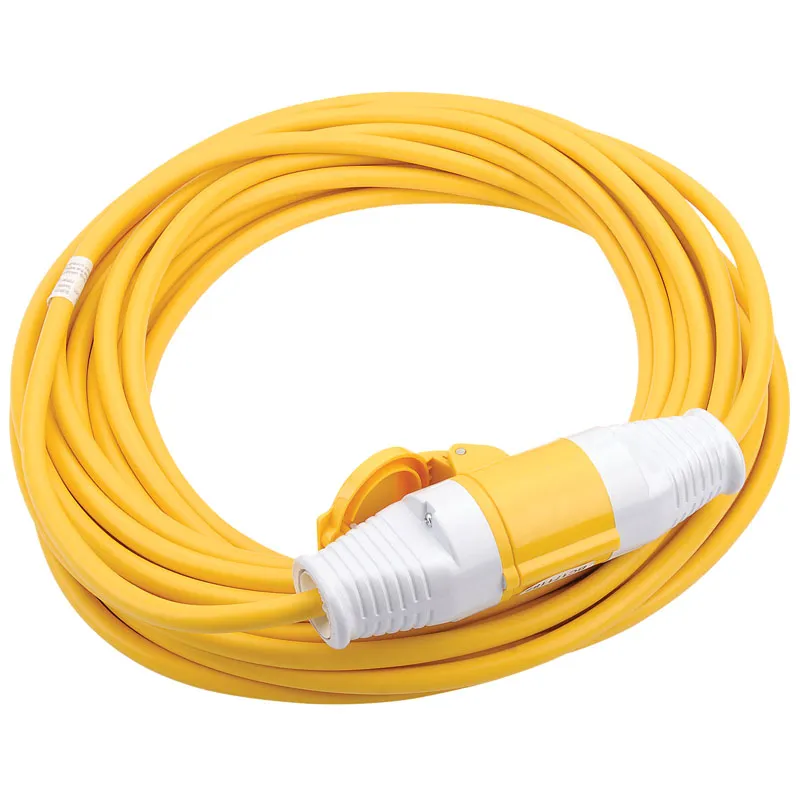
Check which supply the site asks for before you buy, because the version is fixed. Shibuya builds the same motor in different voltage versions with different rated input and speeds. The H2531 comes in 110 V, 110-120 V and 220-240 V and is rated 2,750 W at 110 V and 3,450 W at 110-120 V and 220-240 V. Bycon lists the DMP-352 and the DB-132 at 230 V, and Eibenstock lists the ESD 162 at 230 V. Ask the counter which version we supply. For site transformers and leads, see Site Power & Electrical.
How the bit fits the motor
The thread on the bit has to match the spindle on the motor. 1 1/4 in UNC is on most of the motors here, and the DB-162D and DB-202D also take 1/2 in G. The DB-132 is different: its connection is M18, and Bycon supplies an M18 to M16 adapter with it. Shibuya motors take UNC 1-1/4 in or A-rod bits.
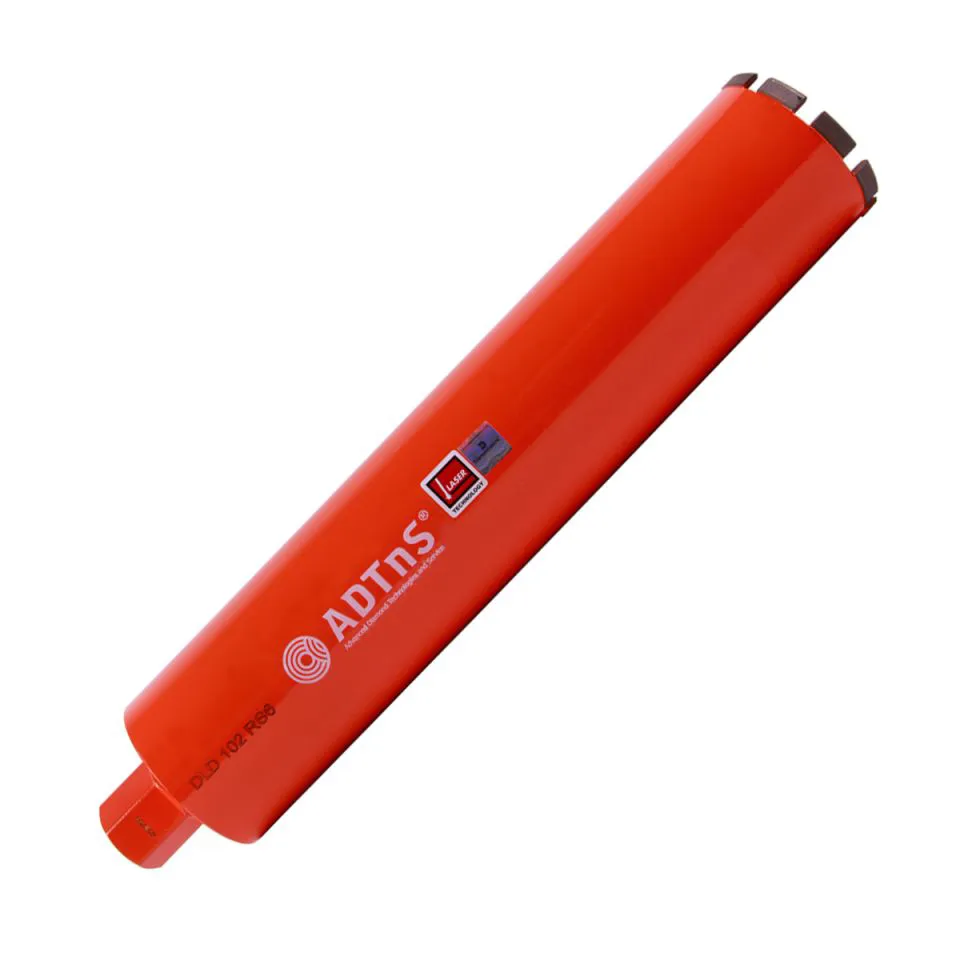
Smaller bits in our range also come with M16 and M14 threads, for example the Distar DDS-W Beton M16 bit and the Distar DDR-V M14 Keramik Pro. An adapter changes one thread to another: the M18 to 1-1/4 UNC adapter, the Shibuya UNC 1-1/4 to A-rod adapter and others are in Core Drilling Accessories. Check both threads before you order the bit from Diamond Core Drill Bits.
Fixing a core drill stand: anchor, vacuum or wall clamp
A rig only drills straight if the base cannot move. There are three ways to fix it.
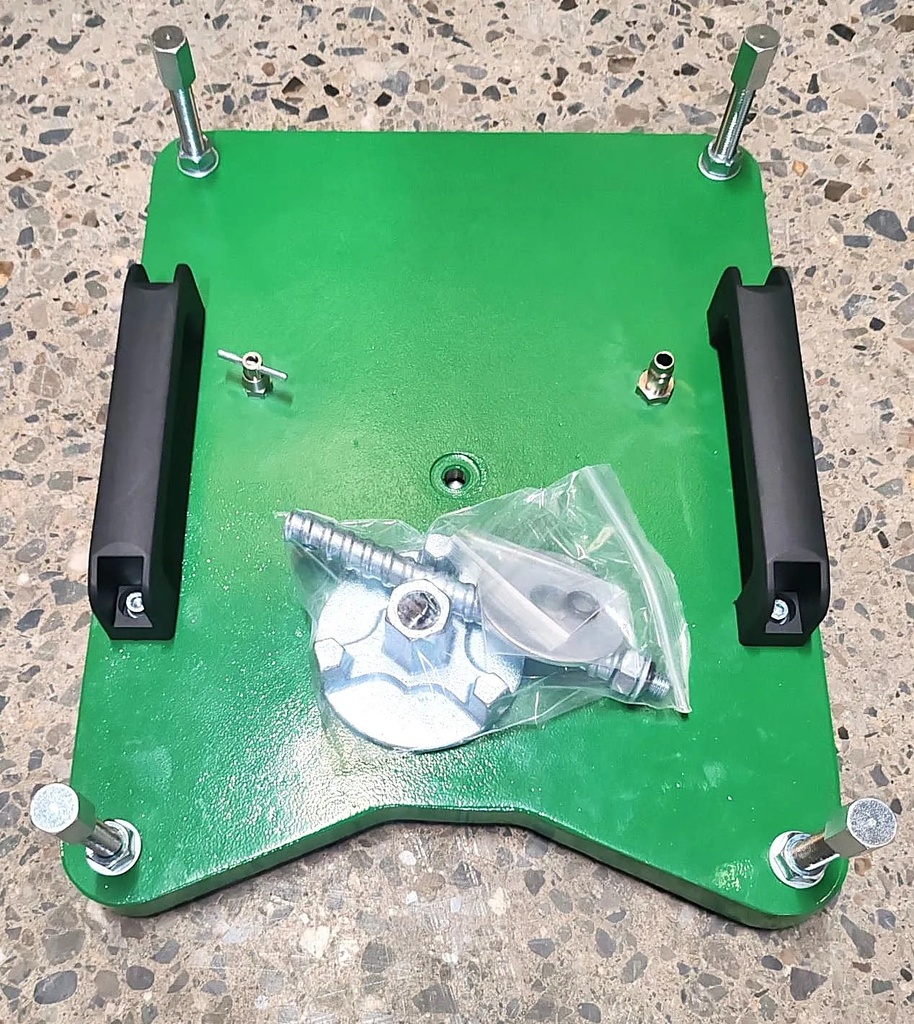
An anchor in the slab is the standard fixing: drill a hole for the anchor, set it, and bolt the stand base down. The anchoring kit, the anchor punch and the M16 drop-in anchor are in our range.
Where you cannot drill an anchor hole, a vacuum plate and pump hold the stand down. Bycon describes its DVP-85 vacuum pump as a secure base for core drilling machines on tiled floors, skin-coated walls and decorative concrete walls; it comes in 220 V and 110 V versions. The DBS-162 has a vacuum base that takes either a vacuum fixing or anchors. Our range also has a vacuum plate. Ask the counter which fixing suits your job.
Where you cannot fix to the floor, a wall clamp fixes the stand to a wall; it is listed for the TS-092/162/252/095/165/255 stands.
Dust and slurry
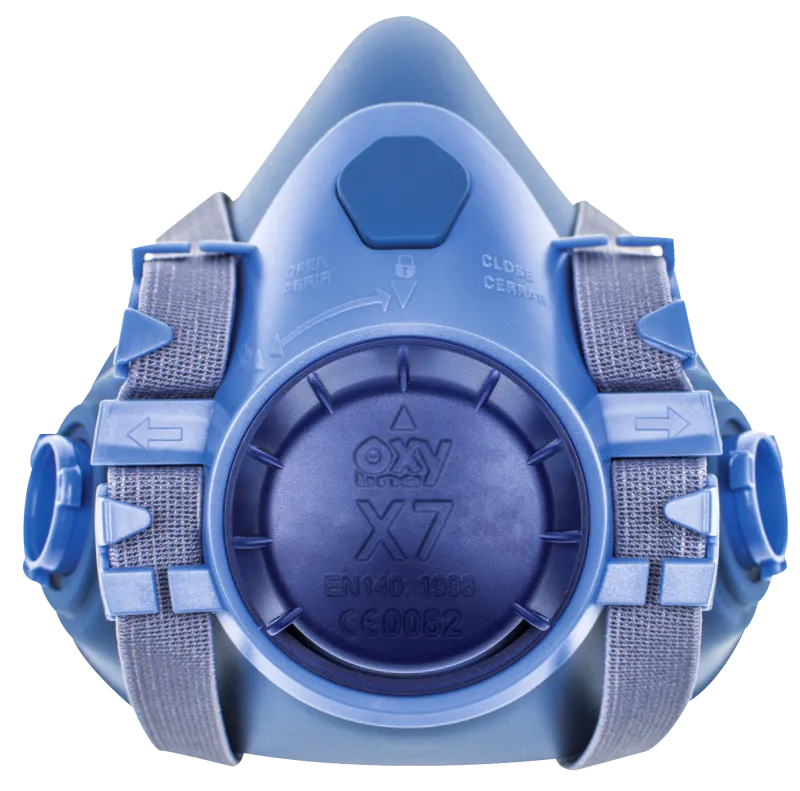
Silica is a major constituent of bricks, tiles, concrete, mortar and engineered stone, and working with these materials can create a very fine dust. For construction work, the Health and Safety Authority advises workers to "use tools and equipment that have on-tool extraction to collect dust when cutting, drilling or chasing".
Dry drilling: use on-tool extraction, such as the DrillSTREAM dust collector with 1 1/4 UNC in and out, or a shroud, run to a dust extractor from Industrial Vacuums & Dust Extractors.
Wet drilling: a slurry collector and a wet vacuum deal with the water and cuttings.
Chooser table
Find the hole size in the first column, then read across the row.
| Hole, up to | Material | Wet or dry | Hand-held or rig | How it is held | From our range |
|---|---|---|---|---|---|
| 132 mm (202 mm in masonry) | concrete, masonry | dry | hand-held | by hand | Bycon DB-132 |
| 162 mm by hand | concrete, masonry | dry | hand-held | by hand | Bycon DB-162D; Eibenstock ESD 162, optimum 82-162 mm |
| 180 mm | concrete | wet | rig | anchor or wall clamp | Shibuya H1521 + TS-165 set |
| 202 mm | concrete | dry or wet, by motor | stand | anchor or vacuum base | Bycon DB-202D on DBS-162, dry; Bycon DMP-202BD, wet |
| 250 mm | concrete | wet | rig | anchor or wall clamp | Shibuya H2021 + TS-255, with 30 mm spacer |
| 400 mm | concrete | wet | rig | anchor | Shibuya H2231 + TS-405, with 30 mm spacer |
| 600 mm | concrete | wet | rig | anchor | Shibuya H2531 + TS-605, with 130 mm spacer |
Supply: check the 110 V or 230 V version before you buy (see "110 V or 230 V" above).
Buy or hire
For a one-off job, a core drill from our hire fleet may make more sense than buying: we hire wet rigs and hand-held drills. Ring the counter on 01 889 9000 and we will talk it through.